

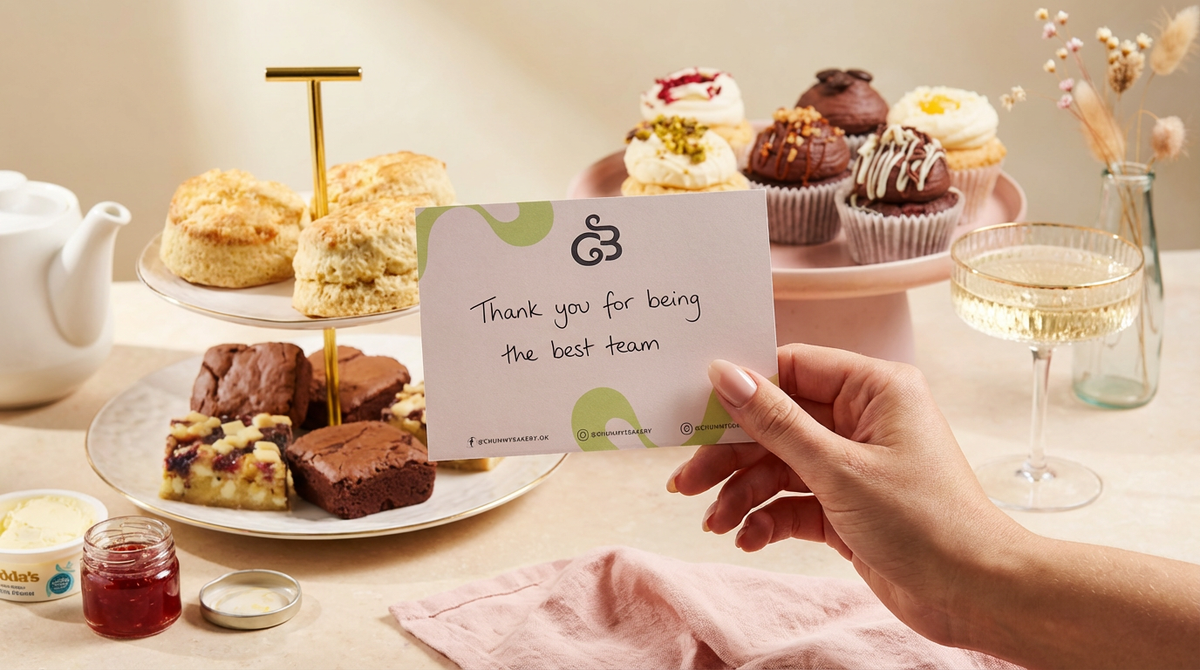
There is a difference between saying “thanks” and making it land.
Most managers already know recognition matters. The harder part is building something practical, fair, and easy to repeat, especially when the team is split across offices, homes, birthdays, launches, deadlines, and the usual last-minute calendar surprises. That is why the best employee appreciation gifts UK teams remember are rarely the grand gestures. More often, they are timely, specific, and thoughtfully chosen.
The wider research backs that up. Gallup says workplace recognition helps people feel valued, boosts engagement, and supports loyalty. In more recent research, well-recognised employees were 45% less likely to have changed organisations two years later. At the same time, Gallup also found that 40% of employees say they receive recognition only a few times a year or less, which tells you the gap is not intention, it is consistency.
At Chummys, that is exactly where we think treats can help. Not as a stand-in for good leadership, but as a simple, repeatable way to mark birthdays, project wins, work anniversaries, and those moments where a team has properly pulled together. If that wins you a few brownie points along the way, even better.
Why simple recognition still works
Recognition does not need to be expensive to be effective. In fact, Gallup’s research points to something more useful than price. Recognition works best when it feels authentic, equitable, personalised, and tied to a real contribution or moment. Similarly, a CIPD evidence review found that verbal praise and positive feedback can strengthen intrinsic interest, while tangible rewards are less effective when they feel expected or loosely connected to performance. In other words, the box is not the recognition on its own. The message and the timing are what give it meaning.
That is also why food gifts still have a place. On our own employee gifting content, we talk about sweet treats as useful because they create immediate enjoyment and a shared experience, and they work for both office teams and remote teams when sent individually. For managers, that matters. A good edible gift feels lighter than branded merch, easier than organising an event, and more personal than dropping credit into a payroll system and hoping someone notices.
The “brownie points” playbook
The trick is not to send treats at random. It is to attach them to moments your team already cares about.
1) Put birthdays on autopilot
Birthdays are one of the easiest places to start because the date is known in advance and the meaning is obvious. Instead of scrambling on the morning itself, build a simple monthly gifting rhythm. Chummys already offers birthday treat pages and repeat-order messaging for birthdays or anniversaries on yearly, quarterly, or monthly cycles, which is exactly the sort of practical structure managers need.
For individual sends, a Mixed Box of Postal Brownies works well because you can choose up to 6 or 12 flavours, schedule delivery, and send it straight to someone’s home. The product page also positions it clearly for birthdays and even “employee of the month” type gifting, which makes it a natural fit for team recognition.
2) Treat work anniversaries like real milestones
Work anniversaries are often overlooked because they do not shout for attention in the same way birthdays do. However, they are one of the cleanest opportunities to reinforce loyalty. If someone has stayed, contributed, and grown with the business, that is worth marking properly, not with a line in Slack and a thumbs-up emoji.
This is where a bestsellers brownie box or a personalised mixed brownie box makes sense. It feels celebratory, it is easy to ship, and it does not force the recipient into choosing from a list or redeeming a code later. Chummys brownie boxes are handmade in the UK, offer a delivery date option at checkout, and include a gift message field, which makes them easy to tie to a specific milestone rather than a vague “thanks for everything”.
3) Mark project wins while the moment is still warm
This is where most recognition programmes fall down. Teams pull off a tough launch or salvage a difficult week, then appreciation arrives three weeks later when everyone has already moved on.
In practice, project treats work best when they land fast. A shared Brownie & Cookie Selection Box is a strong office option because it gives mixed tastes something to get excited about and is already positioned on the product page as suitable for cheering someone up or sending as an employee-of-the-month gift. The box includes brownies and chunky NYC cookies, while the cookies keep well for up to two weeks when stored properly, which is useful for hybrid offices where not everyone is in on the same day.
4) Build one recurring team ritual
The strongest appreciation cultures do not rely on heroic managers remembering everything. They build rituals. That could mean a monthly office box after payroll week, a quarterly treat for the team that finished a big delivery cycle, or a small recurring send for remote staff birthdays.
Chummys subscription and repeat-order options make that easier than starting from scratch every time. The postal brownie subscription box is described as an assorted range sent at a frequency of your choosing, while the birthday page explicitly mentions repeat orders on monthly, quarterly, or yearly cycles. That is the sort of low-admin system that stops appreciation becoming a once-a-year exercise.
Which Chummys format suits which team?
There is no single right answer here. The right box depends on whether you are sending to one person, a shared office, or a mix of both.
For remote or hybrid teams
If people are spread across the UK, individual postal brownie boxes are usually the easiest option. The mixed brownie box lets you build a 6 or 12 flavour selection, while the bestsellers box keeps the decision-making simple if you just want something that lands well. Both routes support delivery date selection and gift messaging, which matters when you are trying to make the treat feel considered rather than automatic.
For office-based teams
If you are sending into one office, corporate brownie gifts often work best as a shared table moment. The brownie and cookie selection box is a good example because it covers both sides of the bakery counter in one go. Meanwhile, the cookie delivery page makes it clear that cookie boxes come in 6 or 12, allow one-time purchase or subscription, and keep for up to two weeks in an airtight container or cool, dry place, which makes them practical for slower office snacking rather than a single forced cake break.
For larger teams or event planners
If you are ordering for a bigger team, staff event, or multi-recipient campaign, the corporate gifting page is the useful starting point. Chummys says smaller orders can go directly through the website, while larger orders can be handled through the quote route. The same page positions the bakery for staff treats, client retention, events, and pitches, with delivery available nationwide.
That matters because event planners and managers usually need the process to be as reliable as the gift itself. Good employee appreciation gifts UK programmes are rarely about one perfect present. They are about repeatability.
How to make appreciation feel genuine, not generic
The fastest way to flatten a good idea is to make it feel formulaic. A brownie box with no context can still be lovely, but it will not do much for culture on its own.
First, make the message specific. Gallup’s work on recognition keeps coming back to the same point, people respond when recognition feels authentic and personalised. So instead of “Thanks for all you do”, say what they actually did. Try “Thanks for keeping the client calm during a messy week” or “You carried the planning on that launch and everyone noticed.” That turns a treat into recognition, not just sugar.
Second, keep it equitable. CIPD’s evidence review notes that recognition can create envy or resentment if it feels unfair or overly public. So if you run an employee-of-the-month idea, be careful not to reward the same visible personalities every time while quieter contributors get ignored. A better system usually mixes individual recognition with team milestones and life events, so the programme feels balanced.
Third, do not overcomplicate it. You do not need five approval stages, a branded gift deck, and a budget committee for every tray of brownies. You need a calendar, a simple budget tier, a shortlist of moments worth marking, and a process that someone can actually maintain.
The practical checklist for managers and event teams
If you want a treat programme that survives beyond one enthusiastic quarter, keep it simple:
- Pick your recurring moments, usually birthdays, work anniversaries, project wins, and welcome gifts.
- Match the format to the team, individual boxes for remote staff, shared boxes for office teams.
- Keep a short note template, but personalise one line every time.
- Track dietary needs and delivery addresses in one place.
- Schedule delivery dates in advance where possible.
- For bigger orders, use the corporate quote route rather than stitching together multiple one-offs.
- If you are sending to homes, remember Chummys boxes do not fit through a standard letterbox, so it helps to plan for someone being in, or for a safe place or neighbour option through DPD.
A few common questions managers ask
Are food gifts too informal for employee recognition?
Not if the context is right. Food gifts are often easier to land than formal awards because they create an immediate shared moment, especially in offices, and they can still feel personal when paired with a proper note. Chummys own employee gifting content leans into exactly that, positioning brownies, cookies, cupcakes, and afternoon tea as useful for morale, milestones, and remote gifting.
Are corporate brownie gifts suitable for remote teams?
Yes, often more than office-only gifts. Postal brownie boxes, cookie boxes, and subscription formats are all designed for delivery, with gift message options and delivery-date selection on relevant product pages. That makes them easier to coordinate across homes than, say, organising one in-person lunch that half the team cannot attend.
How often should managers recognise their teams?
More often than most organisations currently do, but with less fuss than people imagine. Gallup found that many employees still receive recognition only a few times a year or less, even though good recognition is associated with stronger culture, engagement, and retention. Monthly or quarterly rhythms usually work better than waiting for one annual gesture.
What is the best message to include with a gift?
Short, specific, and human. Name the moment. Name the contribution. Keep it warm. The note is where the appreciation happens. The brownies just help it stick.
A good recognition programme does not need to be flashy. It needs to be consistent, fair, and easy for busy managers to keep going. That is why we like this “brownie points” approach so much at Chummys. A thoughtful brownie or cookie box will not replace good leadership, but it can make appreciation visible, memorable, and much easier to repeat across birthdays, milestones, and the everyday wins that keep a team moving.



Share:
Ready, Set, Bake: Great British Bake Off-Inspired Hosting with Spring Cakes, Brownies and Afternoon Tea
Wedding Favour Ideas: Brownie & Cookie Boxes Guests Actually Want